Five signs your sprinkler system needs a repair call
Most sprinkler trouble announces itself early if you know what to look for.
October 14, 2026 · 4 min read
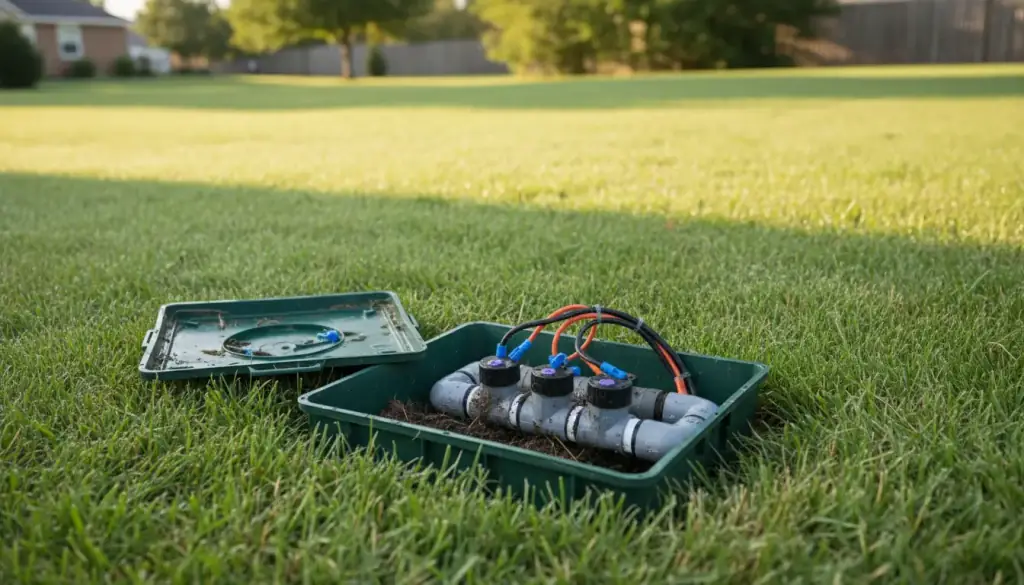
A sprinkler system works in the background, so you rarely think about it until something goes wrong. The good news is that most problems leave clues well before the lawn dies. A weak spray, a soggy patch or a zone that never seems to run is a symptom you can describe, and a clear description helps a repair visit go faster. These are the five signs worth acting on.
- Low pressure or weak, uneven spray.
- Broken, leaning or geysering heads.
- A zone that won't turn on, often from a cut wire.
- Valve trouble: zones that won't shut off, or won't open.
- A timer or controller that behaves strangely.
Low pressure and weak spray
If heads that used to throw a clean arc now sputter or reach only half the distance, pressure has dropped somewhere. The cause could be a leak in the line, a partly closed valve, a clogged nozzle or too many heads on one zone. Water also tends to run out of steam at the far end of a zone, so the last head in line is a good place to look first.
Check whether one zone is weak or the whole system. One weak zone points at that zone's pipe or valve. The whole system points at the supply, the backflow assembly or something upstream. Either way, don't just lengthen the run time. You'd be paying to water the lawn unevenly.
Broken heads and soggy ground
Heads are the most exposed part of any system, and they take the abuse. Mowers clip them, cars crush them, and sun-baked plastic cracks. A broken head can send up a geyser, or it can leak quietly into the ground and leave a soft, green, too-wet patch while the rest of the lawn browns.
Walk the yard while a zone runs. Look for leaning heads, missing caps, tall water spouts and ground that stays wet after the zone shuts off. A wet patch that persists is often a broken pipe or fitting under the surface, not just a bad head. Heads are cheap to replace, so don't let one run broken all summer. A reviewer on Google noted that Precision repaired or replaced several sprinkler heads at just above material cost, which is a fair thing to ask any contractor about.
Zones that won't start: wires and valves
Each zone has a valve, and each valve takes its signal from the controller through a low-voltage wire. When the wire is cut, which happens easily when someone digs a post hole or plants a tree, the controller sends the signal and nothing answers. The zone stays dry. A failed solenoid on the valve does the same thing.
Valves fail in the other direction too. A valve that sticks open can leave a zone running after the controller shuts it off, and you'll see a wet area that never dries or a water bill that doesn't match your schedule. Debris under the valve seal is a common cause. Locating, repairing or replacing the valve is part of a normal sprinkler repair call.
If one zone has gone silent, think back. Did anyone dig, trench or install something near that part of the yard recently? That detail can save real diagnostic time.
Timer and controller faults
The controller is the brain, and it can fail or simply get confused. Signs include a blank or flickering display, a schedule that runs at the wrong time, zones that run in the wrong order, or no response at all. Sometimes it's a dead backup battery that lost the program after a power outage. Sometimes the unit is old and needs replacing.
Before calling, check that the controller is plugged in and set to automatic, not off. Then check that the rain-freeze sensor isn't telling it to hold. A sensor that has failed in the wet position can keep a controller from running at all, and it's an easy thing to miss.
What to note before you call
A repair tech can only diagnose what you describe or what they can see. A few minutes of preparation helps the visit.
- Which zone or zones are affected, and how many zones the system has.
- What you observed: weak spray, no water, water that won't stop, a wet patch.
- When it started, and whether anything changed first, such as digging, a power outage or a storm.
- Any controller error codes or display messages.
- Photos of broken heads, wet areas and the controller.
- The brand on the controller or heads, if you can read it.
Precision Irrigation Systems repairs timers and clocks, broken heads, broken pipes and fittings, cut sprinkler wires and valves, and diagnoses low-pressure problems. It stocks replacement parts and offers transparent quotes and preventative maintenance. Read more on the irrigation repairs page at /services/irrigation-repairs, or call (469) 534-1100. Every inquiry gets a reply within 24 hours.
Precision Irrigation Systems, (469) 534-1100
Call (469) 534-1100More articles
Why one corner of your lawn always browns first
The patch that quits first in July is telling you something about how the sprinklers were laid out.
Drip irrigation for Dallas beds under twice-weekly watering rules
If your shrub beds struggle on a sprinkler schedule, putting the water at the roots may be the simpler answer.