Winterizing and spring setup for a North Texas sprinkler system
A little care at both ends of winter keeps cracked pipes and dead zones out of your first warm month.
October 14, 2026 · 4 min read
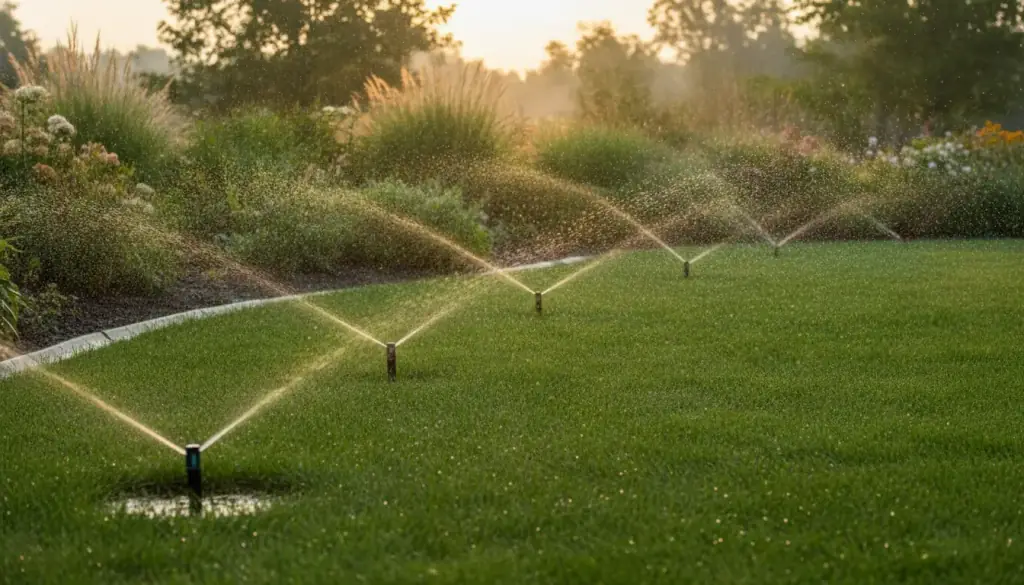
Winter in North Texas doesn't behave. A week of mild days can end with a hard freeze overnight, and a sprinkler system full of water has no way to dodge it. Water expands as it freezes, and pipe, valves and the backflow assembly are the places that give. The damage usually stays hidden until the first warm weekend, when you turn the system on and find a geyser in the flower bed.
Two visits a year prevent most of it: a winterizing pass before the cold sets in, and a setup pass once spring arrives. Here's what each one should include, so you know what you're asking for.
What a blow-out does
Winterizing means getting the water out of the lines. A technician shuts off the supply to the system, connects an air compressor and pushes air through each zone in turn. The air drives the remaining water out through the heads until they run dry. Working one zone at a time matters, because it keeps the air volume manageable and lets the tech watch every head clear.
The pressure used matters just as much. Too little air leaves pockets of water in low spots. Too much can damage heads and fittings that were never meant to take it. This is a job where experience pays off, and it's one of the reasons homeowners hand it to a licensed irrigator instead of renting a compressor.
Rain-freeze sensors and the controller
Even a drained system benefits from a little automation. A rain-freeze sensor tells the controller to hold off when it's raining or when temperatures are near freezing, so you don't coat a driveway with ice or run a zone into a cold snap. If your system doesn't have one, adding it is a small job compared with what it prevents.
Before the cold arrives, put the controller into its off or rain-delay mode so it doesn't try to run an empty system. Write down your zone schedule first. A power blip or a reset in February is a good way to lose a program you set up years ago.
Spring setup: turn it on slowly, then check everything
Bringing a system back to life is more than flipping a valve. Water should be reintroduced gradually. Opening the supply all at once slams pressurized water into empty pipe, and that shock can crack fittings. Once the lines are full, the real work begins, which is running every zone and looking at every head.
- Backflow assembly: look for leaks or odd noises when the water comes on, and confirm it's in working order. Texas requires backflow prevention to meet code, so have it looked at if anything seems off.
- Each zone, one at a time: confirm it starts, runs and shuts off cleanly.
- Every head: check for clogged nozzles, cracked bodies, tilted risers and heads buried in grass.
- Coverage: confirm the spray reaches the next head and isn't hitting the house, the fence or the street.
- Soggy spots: a spot that stays wet after a zone shuts off often means a leak in the line or a stuck valve.
- Rain-freeze sensor: test that it actually interrupts the controller.
- Controller: reload your schedule and set it for spring, not the program that was running last September.
A head that was fine in October can be broken in March. Mowers, aerators and frost heave all take a toll on a dormant system, and the break doesn't announce itself until you look.
Check coverage, not just whether the water comes on
A zone that turns on isn't necessarily a zone that works. Watch it run and look for the same things you'd look for on a new install: arcs that reach the neighboring head, no dry stripes, and no heads misted to a fine fog by too much pressure. Low pressure at one end of a zone points to a leak or a partly closed valve upstream, and it's much easier to fix in spring than in the middle of July.
Spring is also the right time to reset your thinking about run times. Lawns need less water in cool weather and more in heat, so a schedule that suited August will overwater April. If you have to guess, err toward watering less and checking the turf more, then adjust.
What to ask for when you book
Winterizing and spring setup are services Precision Irrigation Systems lists in its sprinkler work, along with repairing or replacing timers, broken heads, pipes and fittings, installing rain-freeze sensors, and checking coverage and zone operation at all heads. When you call, mention how many zones you have, whether the system has a rain-freeze sensor and whether you've noticed any wet spots or weak heads.
You can read more on the sprinkler systems page at /services/sprinkler-systems, or call (469) 534-1100. Precision replies to inquiries within 24 hours and gives free installation estimates on new systems.
Precision Irrigation Systems, (469) 534-1100
Call (469) 534-1100More articles
Why one corner of your lawn always browns first
The patch that quits first in July is telling you something about how the sprinklers were laid out.
Drip irrigation for Dallas beds under twice-weekly watering rules
If your shrub beds struggle on a sprinkler schedule, putting the water at the roots may be the simpler answer.